How much difference could you make to an F1 team without designing a part that goes on the car? From improving pit equipment to helping deliver tests, off-car engineering offers plenty of ways to influence performance. If you enjoy seeing your work put to use, there’s a lot to get excited about in off-car engineer jobs.
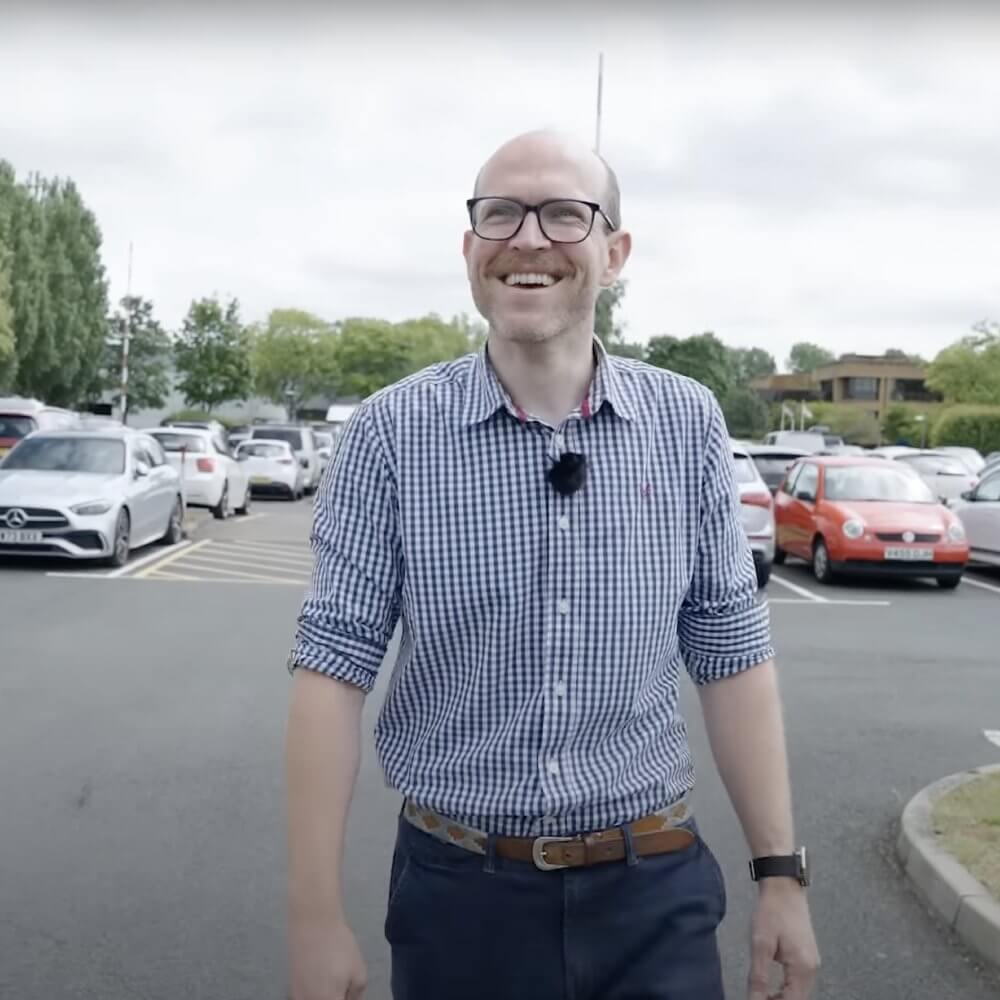
We spoke to Thomas Davies, a Project Manager for Off Car Engineering, Vehicle Technology and Materials here at Atlassian Williams F1 Team to learn how his role helps us create the winning formula.
What does off-car engineering involve in F1?
Off-car engineering covers equipment and systems that support the operation of the race car, including the pit equipment our mechanics rely on. The challenge is understanding how that equipment can work better as well as helping the people using it perform at their best.
Tom’s wider remit also includes vehicle technology and materials. Working across departments, he helps engineers plan how their projects can move forward. It’s a role that requires curiosity, as he needs to ask the right questions and bring the right people into the conversations.
As he explains:
“I’ll sit down with engineers, understand the scope of work and then see where we can deliver that to the car.”
For Tom, the connection between those conversations and the finished result has been particularly rewarding:
“How much impact I could actually have on the car was the biggest surprise for me when I began in this role. Within the area that I’m a part of, I actually do have a lot of control and have a big influence on what ends up in the car.”
It’s a chance to make real impact through work you can take ownership of, with colleagues who share your ambition to improve.
How off-car engineering helps improve F1 performance
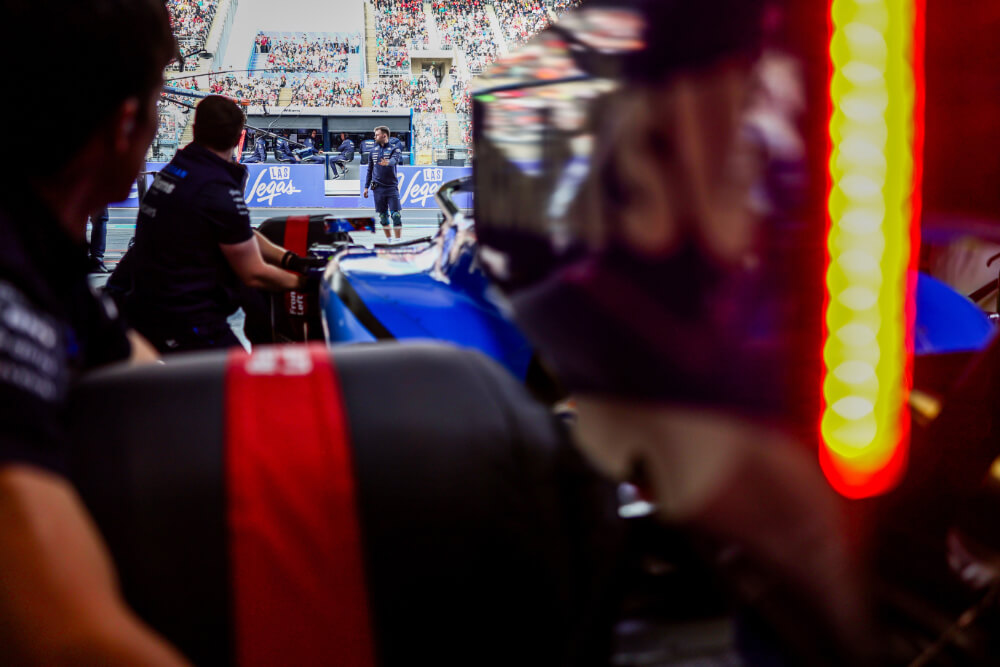
Pit equipment gives that ambition a very practical focus. Tom has been working on wheel guns, looking at improvements to help achieve faster pit stops. Watching the different stages of an F1 pit stop shows just how closely the crew and their equipment need to work together.
That’s where new ideas have to earn their place. An improvement needs to help the person using the equipment do their job. Listening to their needs and learning from feedback keeps the engineering focused on something useful.
Tom’s work has also included a test project for the simulation department. Delivering the information those engineers needed was a proud moment, with the potential to support future performance:
“It was a test that has a really good chance of delivering some real lap time performance, and we managed to meet all the success criteria that we set out, which has been really good to see.”
The skills behind F1 project management careers
A good plan gives people confidence in what needs to happen next. In F1 project management, you need to understand the engineering well enough to ask useful questions, while keeping sight of how individual tasks affect the wider project.
For Tom, a big part of his job is knowing what needs attention now and making those priorities clear to everyone involved:
“The role involves a lot of prioritisation, being able to identify what’s key in the next hour, days, weeks, months, and then being able to organise that in a way that makes sense to everyone, whether that’s the engineers or the stakeholders.”
Plans also need room to adapt. When new information changes what’s possible, flexible thinking helps the team find a way forward. Staying calm under pressure and offering help early can make a difficult conversation much more productive.
Asked for his team’s tagline, Tom chose: “Don’t be the enemy of progress.” It shows how we own our outcomes and keep looking for ways to move forward at Williams.
Finding your route into an F1 off-car engineering career
You don’t need to have mapped out a Formula 1 career from childhood to pursue one. Tom became interested in joining the sport while working in aerospace and spent time understanding what employers were looking for.
For anyone exploring how to become an F1 engineer, his experience shows why it’s worth considering how skills from another industry could transfer. He explains the background that helped him make his move:
“I did mechanical engineering at university. Then, out of that, I got a job in project coordination at an aerospace consultancy. From there, I gained the skills that got me the job.”
Even then, applying took a little belief:
“It was quite a new aspiration. It’s something that I never thought that I’d get into, and so I just gave it a go.”
If a role interests you, look closely at its requirements and show how your experience fits. You might be closer than you think.
Growing your F1 career at Atlassian Williams F1 Team
Since joining Williams, Tom has progressed from project coordinator to project manager, taking on more responsibility for strategic planning. He wants to keep broadening his experience across the car, having already worked in areas including steering, suspension and brakes.
There’s plenty to learn, and teammates willing to share their knowledge make a difference. Tom credits our Head of Operational Programme with helping him understand where to focus when delivering parts. Asked what makes Williams a good place to work, his answer was simple:
“The people. It has to be the people. Everyone’s so friendly, helpful, and willing to spend some time to really go through and explain things, which is really important for planning jobs because you need to get into the detail.”
That willingness to help is how we grow stronger together. Sharing what we know builds confidence and gives people the support to stretch themselves. For Tom, the demands of the role have been supported by working with people who want him to succeed.
Explore F1 engineering careers and find your place
Our engineering heritage gives us plenty to be proud of, and we’re ambitious about what comes next. Off-car engineering is one way to shape the future of our team, helping colleagues turn promising ideas into work that delivers.
Ready to bring your experience to Williams? Explore our current opportunities or join our talent community. Find your place in a team determined to improve together and help create the winning formula.