As the only part of an F1 car to touch the track, tyres are crucial components to get right. Everything the car can do has to pass through four contact patches that change with temperature, load, wear and the surface underneath them. The smallest shift can change what the driver feels and how much lap time the car can find.
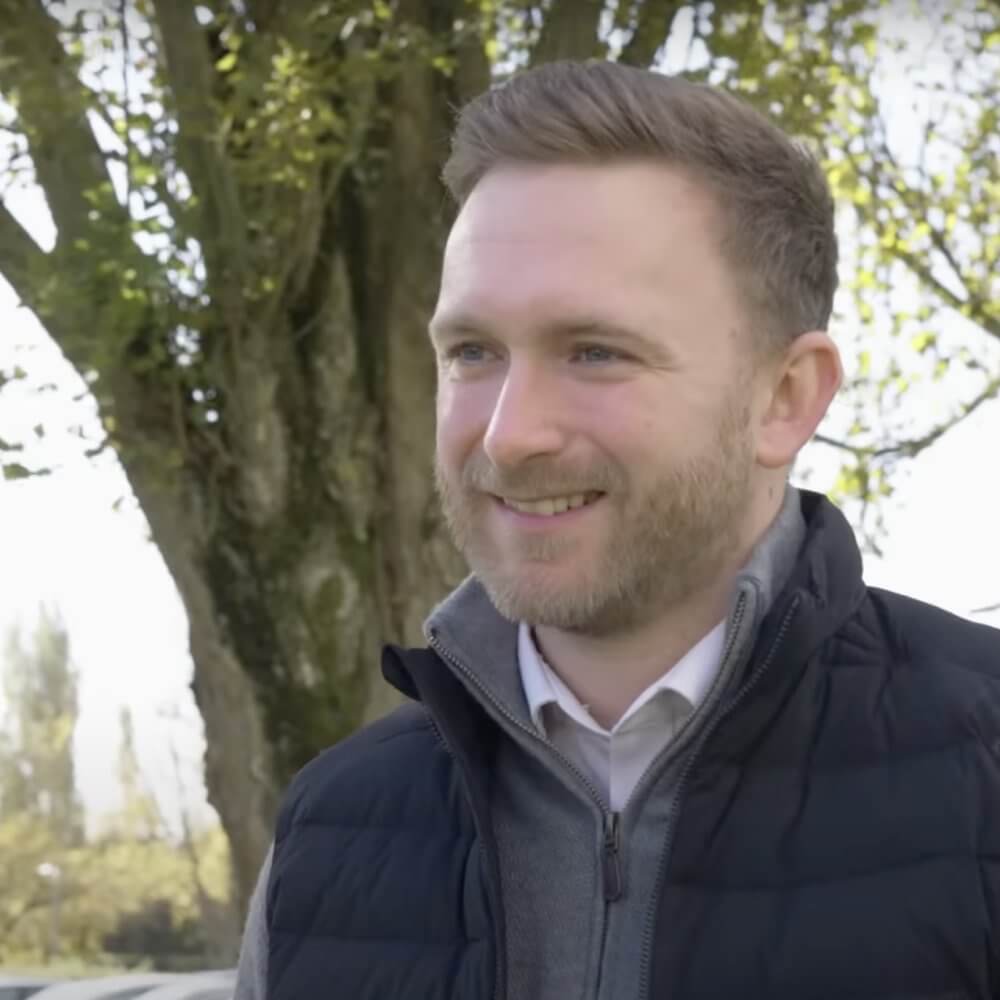
At Atlassian Williams F1 Team, the tyre science group turns that changing behaviour into models the wider Vehicle Dynamics team can use. Christopher Doherty, Tyre Science Vehicle Dynamics Team Lead, takes us inside one of the most complex areas of car performance.
Why tyre science matters in F1 vehicle dynamics jobs
Tyre science jobs are about turning a complicated component into something engineers can model and use. A tyre never behaves in one fixed way. Its response changes from one circuit to the next. Understanding those changes helps engineers predict what the driver will feel and how the car is likely to perform.
That makes tyre science a key part of vehicle dynamics. Engineers study the physics behind tyre behaviour, then capture it in models that support simulation, setup decisions and car development. The closer those models come to reality, the more useful they become to the teams making decisions around the car.
How to succeed in a Formula 1 tyre science job
In a tyre science role, the aim is to help us understand how the car interacts with the circuit and where performance can be unlocked. Building a useful tyre model starts well before the simulation runs. Engineers need to understand the forces involved, develop the equations behind them, and decide how that behaviour should be represented in code.
Christopher describes how much range the role can demand:
“Because tyres are such a multidisciplinary item, engineers need to have knowledge of a number of domains of physics. There’s a lot that we do that’s derivation of equations on pen and paper and then integrating that into simulation code. My group does both of those tasks; we do all the first principles of development and also integrate that into the code.”
“Each of those requires a different skillset, but the advantage of having the same group of people across it is that you get a more seamless transition and fewer things are lost in translation as you move from creation into the deployment. We have to be skilled in a number of different areas, but especially programming, chemistry, physics and understanding of structures and dynamics.”
How tyre models support race weekend performance
Tyre science is not something that only happens in the factory. During a race weekend, the group supports live running, helps re-correlate models and gives other teams sharper information to use at the circuit.
Christopher explains:
“Tyre science will support the Friday session; we will have people in the Ops room and also people on the DiL [driver in loop simulator]. These engineers are following along with the sessions.”
“The tyre performance team use our models and our tools. They’re the ones who are trying to optimise those aspects at the racetrack to get the best performance from the car.”
Saturday brings a different kind of pressure because much of the setup direction has already been decided. Sunday is apparently no calmer, as Christopher attests:
“On a Sunday, you’ll find me watching the race probably under immense duress and anxiety, just because that’s the only way to watch a race!”
Anyone emotionally invested in a Grand Prix may recognise the feeling.
The skills behind Formula 1 tyre science jobs
Formula 1 tyre science jobs suit engineers who enjoy moving between disciplines. A strong background in engineering or physics provides a useful foundation, along with experience in simulation and model development.
Programming is central because the underlying physics needs to become reliable, computationally efficient software. MATLAB, Python and C++ are all relevant, as is an understanding of vehicle dynamics and how setup changes affect tyre behaviour.
Useful strengths include:
- Developing models from first-principles engineering
- Interpreting simulation and track data
- Programming and analytical problem-solving
- Explaining technical findings clearly to other groups
Experience does not have to begin in Formula 1. Christopher joined Williams after working in motorsport overseas and returning to education to change direction:
“To get my role, I applied online. I was working in motorsports in the United States and I decided I wanted to work in Formula 1. I went back to school, got a degree in controls engineering, and it was a great turning point to switch career focus. I applied for a Williams role as a senior engineer in vehicle dynamics and here I am.”
He initially worked in performance simulation before moving into tyre science:
“When I came to Williams, I was more on the performance simulation side, working on new simulations techniques and methods. Then I switched into a tyre science role which, while I had a steep learning curve, I also brought different and distinct skills that others may not have had. I was able to leverage some of the skills and experiences I gained elsewhere.”
Growing in vehicle dynamics at Williams
Vehicle dynamics is a broad area, which means there’s room to keep learning. Tyre science connects with simulation, performance, software, race engineering, and long-term car development, so the role naturally allows you to pick up new experiences and gain exposure to different perspectives.
Our culture of internal mobility opens doors to a variety of opportunities. For Christopher, that has meant moving through different areas while still building on what he already knows:
“I’ve had a number of different roles at Williams. When the opportunity to move into something new has been available, I’ve been able to take it and I want that to continue. That doesn’t necessarily mean changing job titles, but I want to learn new things and new techniques. There’s a lot of really interesting AI work and the integration of that into our tools, models and processes is something I’m excited for.”
Explore F1 tyre science jobs at Atlassian Williams F1 Team
F1 tyre science jobs offer the chance to take on a component that never stops presenting new questions. You could help build the models behind race weekend decisions, improve how the team understands the car, and contribute to the technology driving our transformation.
If you’re ready to add your talent to the team, take a look at our latest tyre science jobs today or join our talent community for regular updates.